
Exclusive: The Biodiversity Collection

I'm currently working on a series inspired by British insect biodiversity and the work of Maria Sibylla Merian, whose illustrations have inspired me throughout much of my life. Through this collection, I'm aiming to capture some of my favourite British moths and butterflies alongside the host plants and flowers that sustain them throughout their life cycle, from caterpillar to adult. So far I have completed four pieces in the series: Pear & Oleander, Cherry Blossom & Peacock, Lemon & Swallowtail, and Passion Flower & Fritillary.


Fig. 1 – Pear & Oleander brings together the soft fruiting branches of the pear tree with the striking oleander moth and the extraordinary puss moth caterpillar, one of Britain’s most unusual larvae, known for its vivid green body and distinctive “face-like” markings. The composition also includes a red soldier beetle, commonly found on blossom in spring and early summer, where it feeds on nectar and small insects while also acting as an important pollinator. Together, the piece explores the contrast between delicate orchard growth and the more dramatic, often overlooked insects that inhabit it.
Fig. 2 – Cherry Blossom & Peacock is a celebration of seasonal abundance, combining cherry blossom and fruiting elements with a vibrant assembly of British butterflies. The composition features the peacock butterfly, renowned for its eye-like wing markings used to deter predators, alongside the clouded yellow and common blue butterflies, both frequent visitors to wildflower-rich habitats. Alongside them are the seven-spot ladybird, a well-known aphid predator, and the yellow-banded ramshorn snail.


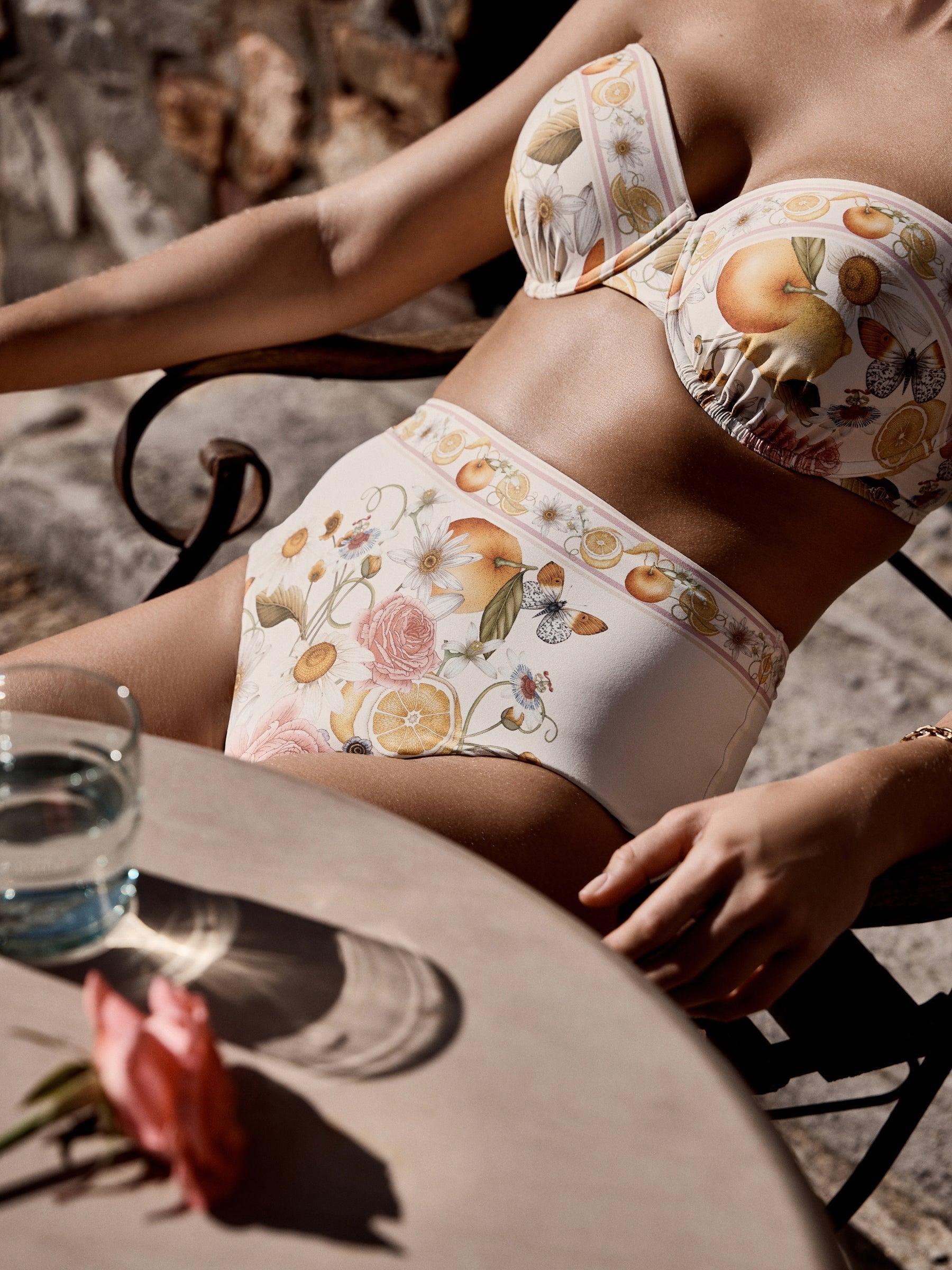
Fig. 3 – Lemon & Swallowtail centres on the glossy foliage and fruit of the lemon tree, accompanied by the magnificent swallowtail butterfly, one of Britain's most striking insects. Also depicted is its remarkable caterpillar, whose green-and-white markings provide effective camouflage amongst leaves and stems. Nestled within the composition are a seven-spot ladybird and the much rarer two-spot ladybird, both valuable predators that help control aphid populations in gardens and orchards.
Fig. 4 - Passion Flower & Fritillary celebrates the extraordinary architecture of the passion flower, a plant whose intricate floral structures fascinated Victorian botanists and continue to inspire artists today. The composition features a fritillary butterfly alongside its distinctive spiny caterpillar, shown feeding amongst the foliage. Also included is a white leafhopper nymph, a tiny sap-feeding insect that inhabits passionflower vines, where it feeds on the plant's stems, leaves and developing fruit. Together, these species highlight the rich ecological relationships that exist within a single plant community.